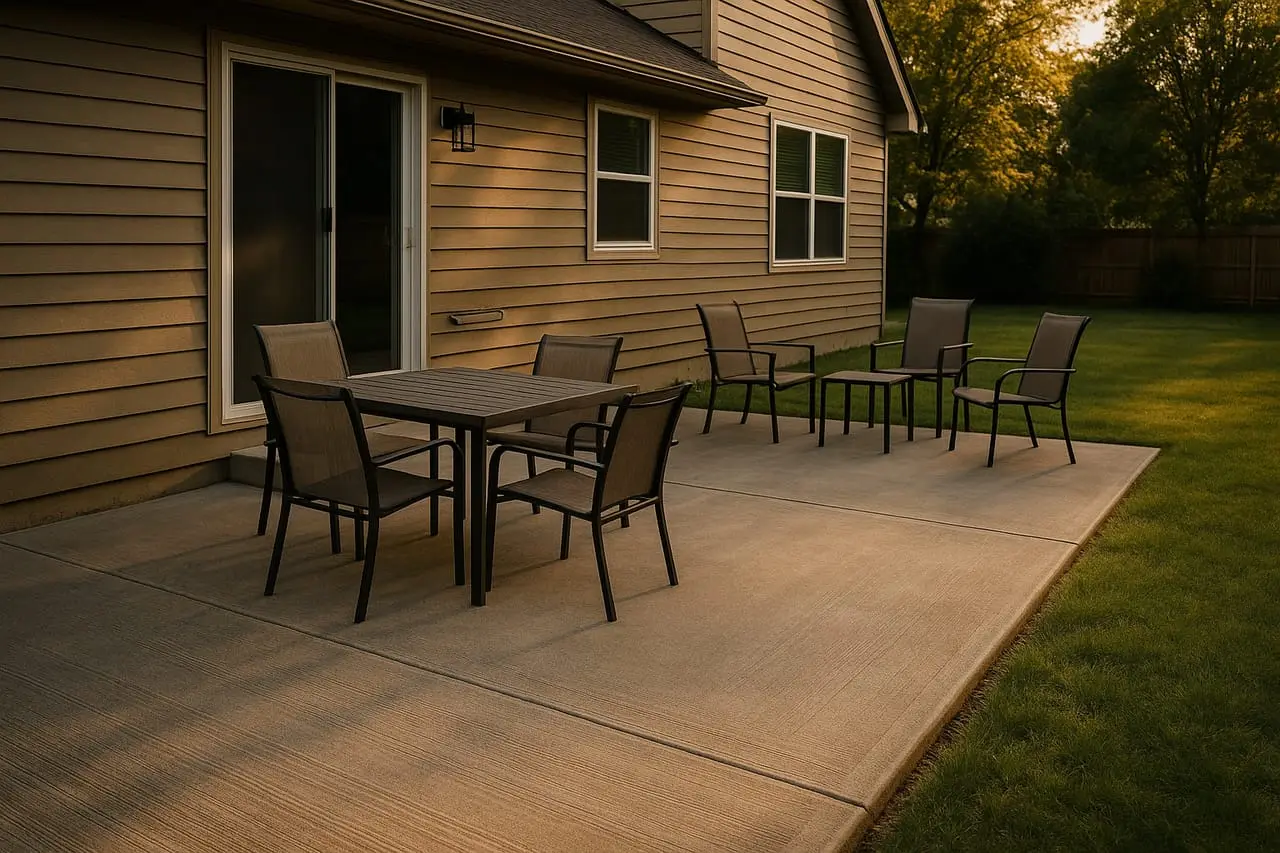
A concrete patio runs about $8 to $20 per square foot installed in the Philadelphia suburbs, so a typical 300-square-foot patio lands somewhere between $2,400 and $6,000. The low end is a plain broom finish on flat, open ground. The high end is stamped or colored concrete with a thicker base, or a backyard the truck can’t reach.
That range is wide for a reason. Two patios the same size can cost very different amounts, and most of the gap comes down to finish and access. Here’s how it actually breaks down.
Cost Per Square Foot by Finish
The finish is the first thing that moves the price. The concrete itself doesn’t change much; the labor and materials to make it look a certain way do.
| Finish | Cost per sq ft (installed) | What you get |
|---|---|---|
| Broom finish (standard gray) | $8 - $12 | Textured, slip-resistant, plain gray. The workhorse patio. |
| Colored / integral color | $11 - $15 | Same finish, dye mixed in or applied so it isn’t bare gray. |
| Exposed aggregate | $12 - $17 | Top layer washed off to show the stone. Good grip, holds up. |
| Stamped concrete | $14 - $20 | Pressed to look like pavers, slate, or brick. Most decorative. |
These are installed numbers, not just material. They include the base prep, forming, the pour, finishing, and basic cleanup. They assume the truck can reach the site or that a short pump run does the job.
What Patio Size Actually Costs
Bigger patios usually cost a little less per square foot because the setup, the crew showing up, and the cleanup are mostly fixed no matter the size. Here’s roughly what common sizes run for a standard broom finish on accessible ground.
| Patio size | Approx. dimensions | Typical installed cost |
|---|---|---|
| 200 sq ft | 10 x 20 | $1,800 - $3,200 |
| 300 sq ft | 12 x 25 | $2,400 - $4,500 |
| 400 sq ft | 16 x 25 | $3,200 - $6,000 |
| 600 sq ft | 20 x 30 | $4,800 - $9,000 |
Want a stamped or colored finish? Slide toward the upper end or above it. These are ballpark figures to plan around, not a quote. The only honest number for your yard comes after we look at it, which is why we do free estimates on concrete patios.
Base Prep and Thickness
What’s under the slab matters as much as the slab. A patio poured on loose dirt will crack and settle no matter how nice the finish looks on day one.
Good prep means excavating a few inches, laying and compacting a gravel base, and setting the forms level. In our area the bigger concern is freeze-thaw. Water gets into the ground, freezes, and pushes. A proper compacted base and the right thickness keep the slab from heaving over a few Pennsylvania winters.
- 4 inches over compacted gravel: standard for furniture, foot traffic, and grills.
- 5 to 6 inches: hot tubs, soft or filled ground, anything holding real weight.
- Control joints cut in: gives the concrete a planned place to crack instead of a random one.
Skipping base prep is the most common way a cheap patio turns expensive. You pay twice when you have to tear it out.
Why Backyard Access Drives the Price
This is the part most homeowners don’t see coming. A patio out front where the truck pulls up to the forms is the cheapest pour there is. A patio behind the house is a different job.
Most backyards in Upper Darby, Drexel Hill, and Havertown are fenced, narrow on the side, or blocked by the house itself. The mixer truck can’t get the chute anywhere near the pour. That leaves two options. You wheelbarrow yards of wet concrete by hand through a gate, which is slow, brutal, and risks the load setting up before it’s placed. Or you pump it.
A concrete pump pushes the mix through a hose over the fence, around the house, or straight through a basement window to the footing. We run tight-access lines and long hose up to 150 feet to reach spots a truck never could. The pump adds a few hundred dollars to the job, but it’s faster, cleaner, and it places the concrete properly instead of fighting it across a yard one barrow at a time. On a backyard patio it’s often the thing that makes the project worth doing at all.
How to Read a Patio Estimate
When you get quotes, line them up on the same terms. A low number that skips base prep or assumes the truck can reach the back isn’t really the cheaper job.
Ask what’s included:
- Slab thickness and whether the base is compacted gravel.
- The finish, in plain words, and whether color or sealer is in the price.
- How the concrete gets to the site. If it’s a backyard, ask if they’re pumping or wheelbarrowing.
- Control joints and a basic warranty.
A real estimate spells those out. If a quote is just one number with no detail, that’s a flag.
Get a Free Estimate
We’ve poured concrete around Delaware County for over 10 years, and we’ll give you a straight answer on what your patio should cost and how we’d reach the spot. Estimates are free, and we serve Upper Darby, Drexel Hill, Havertown, Lansdowne, and Springfield. Call Mike at (215) 850-7536 and we’ll come take a look.