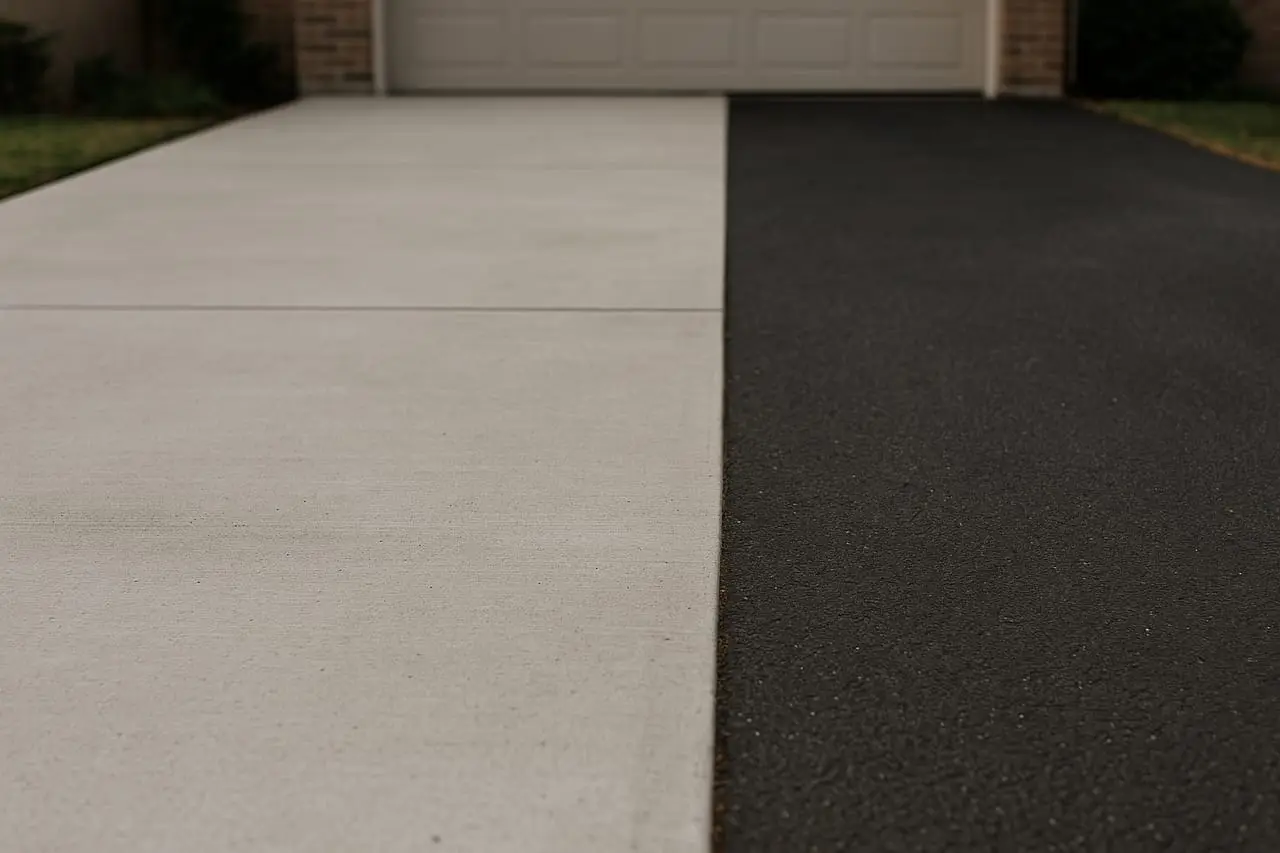
Concrete driveways typically last 25 to 40 years, while asphalt lasts 15 to 20. That’s the short answer. Concrete costs more up front and outlasts asphalt by a wide margin, but asphalt is cheaper to install and easier to patch. Which one makes sense for you comes down to your budget, how long you plan to stay, and how the surface handles Pennsylvania winters.
Here’s how the two compare on the things that actually matter.
How long each one really lasts
Lifespan is the biggest difference between these two surfaces.
A well-poured concrete driveway lasts 25 to 40 years with basic care. The slab is rigid, so once it’s down and cured, it doesn’t move much. The main enemies are freeze-thaw cracking and road salt eating at the surface, both of which you can manage with proper jointing and sealing.
Asphalt runs 15 to 20 years before it needs full replacement. It’s a flexible surface, which is actually a strength in our climate because it moves with the ground instead of cracking. The tradeoff is that asphalt breaks down faster. The oils in it dry out, it gets brittle, and you’ll see cracking and raveling sooner.
So over a 40-year stretch, you’d likely pour concrete once or replace asphalt twice. That’s worth keeping in mind when you compare prices.
The cost comparison
Asphalt wins on the sticker price. Concrete wins over time. Here’s roughly how it shakes out in the Philadelphia area, though every job is different and you should get a free estimate before budgeting.
| Factor | Concrete | Asphalt |
|---|---|---|
| Install cost (per sq ft) | $8–$18 | $7–$13 |
| Lifespan | 25–40 years | 15–20 years |
| Maintenance | Seal every 2–5 years | Seal every 2–3 years, patch cracks |
| Repairs | Harder to patch invisibly | Easy to patch and resurface |
| Cold-weather performance | Rigid, can heave/crack | Flexible, softens in heat |
| Look | Light gray, can stamp/color | Solid black, limited options |
A decorative or stamped concrete driveway pushes toward the high end of that range. A plain broom-finish slab sits lower. For a full breakdown of what drives the number up or down on a concrete pour, see our guide on concrete driveway cost.
How PA freeze-thaw and road salt treat each one
This is where Pennsylvania specifics come in, and it’s the part a lot of online comparisons skip.
Our winters run through dozens of freeze-thaw cycles. Water gets into small cracks and pores, freezes, expands, and pries the surface apart a little more each time. Both materials feel this.
Asphalt handles ground heaving better because it flexes. But it gets soft and sticky in July heat, and the sun dries out the binder over the years. You’ll see it fade from black to gray as it ages, which is a sign it’s drying out.
Concrete is rigid, so freeze-thaw heaving can crack it if the base wasn’t compacted right or the control joints were spaced poorly. The bigger threat here is road salt. The chloride in salt and deicers attacks the concrete surface and causes scaling, where the top layer flakes off. The fixes are real and simple: an air-entrained mix designed for freeze-thaw, proper control joints, and a good sealer reapplied every few years.
Get the base and the pour right and concrete shrugs off most of what a PA winter throws at it. That’s the part you can’t see once the job’s done, and it’s where cutting corners shows up five years later.
Maintenance over the years
Neither surface is zero-effort, but the work is different.
Asphalt needs the most regular attention:
- Sealcoating every 2 to 3 years to keep it from drying out
- Crack filling as small cracks show up
- Resurfacing partway through its life to stretch it out
Concrete is lower-touch but the repairs are tougher:
- Sealing every 2 to 5 years, mostly to fight salt scaling
- Joint maintenance to keep water out
- Patches are harder to hide, since new concrete rarely color-matches old
If you don’t want to think about your driveway much, concrete asks less of you year to year. If you’d rather spend a little regularly than a lot at once, asphalt fits that style.
Which one should you pick?
Honest recommendation, based on use case:
- Staying in the home long-term? Concrete. The longer lifespan pays off and you won’t be repaving in 15 years.
- Tight budget or a rental property? Asphalt. Lower up-front cost, and it’s quick to install and repair.
- Want curb appeal or a specific look? Concrete. You can stamp, color, or broom-finish it. Asphalt is black, period.
- Steep or shifting ground? Asphalt’s flexibility can be an advantage, though good concrete base prep handles most slopes fine.
For most homeowners planning to stay put, concrete is the better long-term value. The up-front cost stings a little more, but you’re buying decades. We lay out the full process and finish options on our concrete driveways page.
Get a free estimate
Mike and the Dougherty Concrete crew have been pouring driveways across Delaware County for over 10 years, serving Upper Darby, Drexel Hill, Havertown, Lansdowne, and Springfield. We’ll walk your property, look at your base and drainage, and give you a straight answer on whether concrete makes sense for your spot. Estimates are free and there’s no pressure. Call us at (215) 850-7536 to set one up.